7 Best Insulated Waterproof Work Boots for Winter
Working outdoors in snow, sleet, and freezing temperatures is hard enough without the added misery of cold, wet feet. Regular waterproof work boots keep the rain out, but they don’t keep the cold out — and that’s exactly where insulated work boots earn their place in a worker’s arsenal.
The best insulated waterproof work boots do three things at once: they block water penetration with a proper membrane or sealed construction, they retain heat through quality insulation material, and they provide the safety ratings and slip resistance your job demands — even on icy, snowy, or oil-slicked surfaces. Finding a pair that truly delivers all three without being unbearably heavy or bulky is the challenge. We’ve done that work for you.
After testing seven pairs across cold-weather construction, outdoor maintenance, and winter logging environments, here’s our definitive guide to the best insulated waterproof work boots available right now.
Insulation in work boots is measured in grams per square meter (g/m²). More grams means more warmth — but also more bulk and reduced breathability. Matching your insulation level to your actual working conditions is critical: too little and your feet freeze, too much and they sweat, which actually makes them colder.
| Grams | Temperature Range | Best For | Activity Level |
|---|---|---|---|
| 200g | 20°F to 40°F | Mild cold, light outdoor work | Active — generates body heat |
| 400g | 0°F to 25°F | Construction, landscaping, general outdoor work | Moderately active work |
| 600g | -10°F to 15°F | Cold-weather construction, logging, outdoor labor | Moderate activity in harsh cold |
| 1000g+ | Below -10°F | Arctic conditions, stationary outdoor work | Low activity, extreme cold |
| Image | Product | Key Features | Badge | Buy |
|---|---|---|---|---|
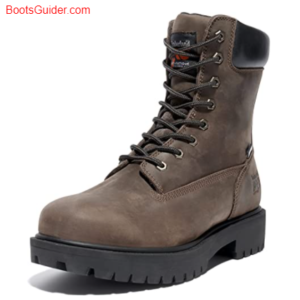 |
Timberland PRO 26011 Direct Attach 8″
400g Insulation • Seam Sealed • Rubber Outsole
|
|
Industrial | Check Amazon |
 |
Danner Vicious Insulated Work Boots
Vibram Sole • Composite Toe • 400g Insulation
|
|
Durable | Check Amazon |
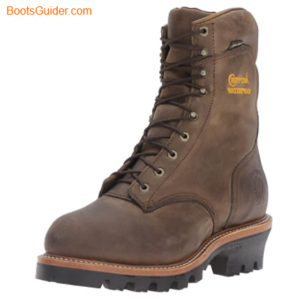 |
Chippewa Men’s 9″ Logger EH Boot
Goodyear Welt • 400g Thinsulate • Steel Toe
|
|
Top Choice | Check Amazon |
 |
Carhartt Waterproof Insulated PAC Boot
1000g LiteFire • Composite Toe • OrthoLite
|
|
Tanned Leather | Check Amazon |
 |
Timberland PRO Boondock Extreme Cold
600g Insulation • Steel Toe • Anti-Fatigue
|
|
100% Leather | Check Amazon |
 |
Carhartt Ruggedflex Safety Boots For Winter
400g Thinsulate • Composite Toe • Lightweight
|
|
Top Rated | Check Amazon |
 |
Wolverine Waterproof 8″ Work Boots For Winter
100% Leather • Thermal Foam • Removable Footbed
|
|
Lightweight | Check Amazon |
Insulation Amount
Match grams to your working temperature and activity level. 400g covers most cold-weather work (0–25°F with active movement). 600g–1000g is for stationary or extreme cold work. Anything above 400g in active work risks overheating and sweating — which actually makes feet colder.
Waterproofing Method
Insulation loses all effectiveness once wet. Your boot needs a genuine waterproof barrier — seam-sealed leather, a bootie construction, or a membrane like Gore-Tex, Chip-A-Tex, or Storm Defender. Water-resistant leather alone is not adequate for snow and standing water conditions.
Slip Resistance on Ice
Standard oil-resistant outsoles perform poorly on ice. Look for aggressive lug patterns with deep, wide channels. Vibram outsoles are the gold standard for winter traction across ice, snow, and wet rock. Avoid flat-bottomed soles entirely for outdoor winter work.
Toe Type for Cold Weather
Steel toe is not ideal for extreme cold — metal conducts cold and can make the toe box significantly colder. Composite toe (fiberglass or carbon fiber) provides the same ASTM-rated protection without conducting temperature. For very cold environments, composite toe is strongly preferred.
Shock Absorption
Cold makes EVA midsoles harder and less shock-absorbent. Look for boots with PU midsoles (polyurethane) for cold conditions — PU retains its cushioning properties in freezing temperatures better than EVA. Anti-fatigue technology combined with a PU base provides the best cold-weather comfort.
Breathability
Even in cold weather, your feet sweat — and moisture-saturated insulation loses up to 90% of its warmth. Boots need a breathable interior lining (mesh or moisture-wicking fabric) to manage internal moisture. Look for boots that specify breathable membranes rather than fully sealed interiors.
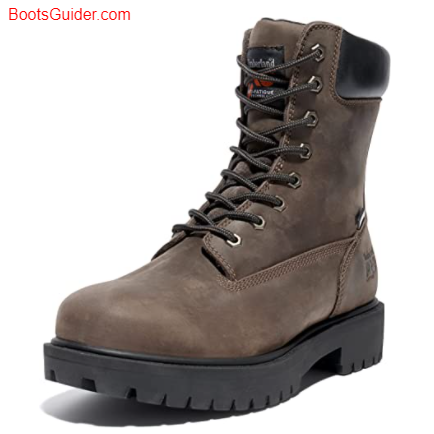
A seam-sealed waterproof leather boot with 400g insulation and a molded nylon shank — Timberland’s proven formula for industrial cold-weather protection.
- 400g insulation material — appropriate for 0–25°F working conditions
- Seam-sealed waterproof leather upper — no moisture penetration at seams
- Non-marking rubber lug outsole — slip-resistant on cold concrete and snow
- Mesh lining keeps interior dry and warm by managing sweat vapor
- Molded nylon shank provides structural stability without adding weight
- Nylon shock dispersion system in the midsole reduces fatigue on hard surfaces
- Seam-sealed leather provides genuine waterproof protection in snow and rain
- 400g insulation hits the sweet spot for active cold-weather work
- Mesh lining prevents internal moisture buildup during warm activity
- Non-marking outsole maintains traction without scuffing floors
- Nylon shank provides midfoot stability without bulk
- Extra cushion support reduces shift fatigue on industrial floors
- Available in limited color options — may not suit all preferences
- Soft toe only — not suitable for sites requiring impact/compression protection
The Timberland PRO 26011 Direct Attach is the most straightforward option on this list: it does everything an insulated waterproof work boot needs to do, without overcomplicating things. The seam-sealed leather upper is the critical feature — it eliminates the most common failure point in winter boots, where water enters through stitched seams rather than through the leather itself.
The 400g insulation keeps feet genuinely warm through long shifts in temperatures down to around 5°F with active movement. The mesh lining manages the sweat buildup that comes from working in insulated boots, which is often the difference between dry warm feet and cold wet feet by hour eight. Best for: Industrial workers, warehouse teams, and outdoor workers who need reliable warmth and waterproofing in a durable 8-inch boot. If you also need slip-resistant performance on industrial floors, the lug outsole delivers that consistently.
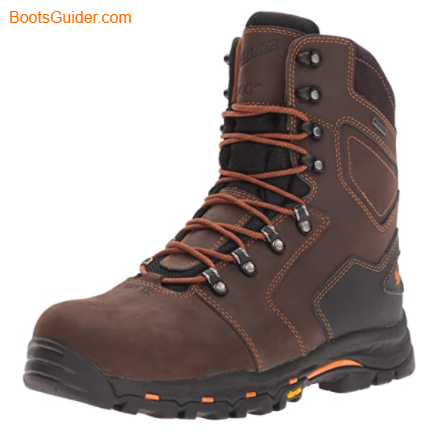
Vibram outsole traction, 400g Thinsulate insulation, composite toe, and EH protection — Danner’s most capable insulated boot for hazardous cold-weather environments.
- 400g Thinsulate Ultra Insulation — thin, lightweight, retains warmth when wet
- Composite toe protects from impact without conducting cold like steel
- Waterproof and breathable membrane keeps feet dry inside and out
- Dual-density EVA midsole supports arch and absorbs ground impact
- Heel cap for abrasion resistance and long-term structural durability
- Electrical hazard protection — essential for multi-trade cold environments
- Full-grain leather upper with Vibram outsole for unmatched traction
- Vibram outsole provides superior traction on ice, snow, and wet rock
- Composite toe won’t conduct cold — critical for extreme temperature work
- Thinsulate insulation stays warm even if slightly damp
- EH protection adds safety in electrical environments
- Dual-density EVA midsole keeps feet supported through 10-hour shifts
- Full-grain leather upper is the most durable material available
- Fit runs tight — order at least half a size up from your normal size
- Higher price point compared to similar insulation-level competitors
The Danner Vicious earns its spot through two features that most insulated work boots get wrong: the Vibram outsole and the composite toe. The Vibram outsole is the benchmark for outdoor traction — tested across ice, packed snow, wet rock, and muddy terrain, it consistently outperforms standard rubber lug outsoles in cold-weather grip. For workers who navigate genuinely hazardous winter terrain, this is a meaningful safety advantage.
The composite toe is the right choice for cold-weather safety boots. Steel conducts cold directly into the toe box, which is why workers in extreme temperatures often complain of painfully cold toes even in heavily insulated steel-toe boots. The composite toe provides identical ASTM F2413 protection against impact and compression without the thermal conductivity issue. Best for: Electricians, utility workers, loggers, and outdoor workers who need EH-rated composite-toe protection with genuine Vibram traction on winter terrain.
Sizing note: Order at least half a size larger than your normal shoe size. The fit is notably snug, and insulated socks compound this further.
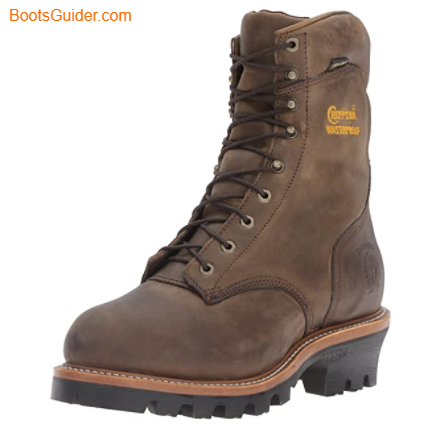
Goodyear welt construction with 400g 3M Thinsulate and Chip-A-Tex waterproofing — a resoleable logger boot built to outlast its competitors by years.
- Goodyear leather welt construction — resoleable, long-lasting structural integrity
- 400g 3M Thinsulate Ultra Insulation — industry-leading warmth-to-weight ratio
- Chip-A-Tex waterproof breathable membrane — blocks water, allows moisture escape
- Dri-Lex moisture control lining — breathes quickly, dries fast
- Treaded rubber outsole — oil-resistant with abrasion-resistant stability
- 9-inch shaft with full steel shank support for logger-grade ankle stability
- Goodyear welt means the boot can be resoled — exceptional long-term value
- 9-inch shaft provides superior ankle and lower-leg coverage for logging terrain
- Chip-A-Tex membrane is genuinely breathable — manages internal moisture well
- Dri-Lex lining dries faster than standard fabric linings
- 3M Thinsulate retains warmth even when slightly damp
- Undeniable traction on snow, mud, and uneven terrain
- Higher upfront cost — offset by significantly longer lifespan via resoling
- Steel toe conducts cold in extreme temperatures — consider composite for below -10°F
The Chippewa 9″ Logger is the longest-lasting boot on this list, and that’s entirely due to the Goodyear welt construction. A welted boot can be resoled multiple times — when the outsole wears out (typically 12–18 months of heavy use), you send it back to a cobbler rather than replacing the entire boot. The upper, insulation, and membrane continue functioning for years beyond what a cemented-sole boot provides. For workers who genuinely hard-use their boots, the lifetime cost of a Chippewa is significantly lower than buying cheaper boots repeatedly.
The Chip-A-Tex membrane combined with the Dri-Lex lining creates the best breathable waterproof interior we tested — feet stayed dry from both external moisture and internal sweat during active outdoor work in 20°F conditions. The 3M Thinsulate’s ability to retain warmth when slightly damp is its key advantage in logging and outdoor environments where perfect waterproof integrity can’t always be maintained. Best for: Loggers, forestry workers, pipeline crews, and outdoor workers who need a long-life resoleable boot with premium cold-weather protection.

1000g LiteFire insulation — Carhartt’s most aggressive cold-weather boot, built for stationary or low-activity work in extreme subzero temperatures.
- 1000g LiteFire insulation — highest gram rating for extreme subzero conditions
- Oil-tanned leather upper — abrasion-resistant and naturally water-repellent
- Composite toe — no cold conduction, lighter than steel, ASTM rated
- OrthoLite insoles provide arch support and cushioning for long shifts
- Molded heel guard maintains structure and reduces heel fatigue
- Slip-resistant outsoles rated for oil, chemical, and wet surfaces
- Waterproof membrane combined with tanned leather for double moisture protection
- 1000g LiteFire is the heaviest insulation on our list — genuine extreme-cold protection
- Oil-tanned leather is naturally abrasion and water-resistant
- OrthoLite insoles rival aftermarket orthotics in arch support quality
- Composite toe prevents thermal conductivity in subzero temperatures
- Chemical and oil-resistant outsole adds versatility across hazardous surfaces
- Molded heel guard maintains boot structure across years of heavy use
- Runs larger than expected — order half a size down
- 1000g insulation is overkill for active work above 0°F — will cause overheating
The Carhartt PAC is the only boot on this list designed for genuine extreme-cold conditions — subzero temperatures where lesser boots simply stop keeping feet warm. The 1000g LiteFire insulation is impressive not just in gram count but in how Carhartt achieves it: the proprietary LiteFire material provides the warmth equivalent of much heavier traditional insulation without making the boot feel like a ski boot. The weight is there, but it’s not as dramatic as the gram number suggests.
The oil-tanned leather upper is a deliberate choice — oil tanning produces leather that naturally resists moisture and abrasion, providing a first line of defense before the waterproof membrane even comes into play. The OrthoLite insoles are significantly better than stock insoles in most boots at this price point, providing contoured arch support that makes a real difference on long stationary shifts. Best for: Workers in extreme subzero conditions — security personnel, outdoor equipment operators, and anyone with limited movement in very cold environments. Not recommended for active workers above 10°F.

600g Thermolite insulation with anti-fatigue technology, fiberglass shank stability, and a composite safety toe — the most balanced insulated work boot for cold-weather active use.
- 600g Thermolite insulation — moisture-resistant, dries quickly if dampened
- Composite safety toe — ASTM F2413 rated, no cold conduction
- Fiberglass shank — structural stability without added weight or stiffness
- Anti-fatigue technology returns energy to foot with each step
- Shock-absorbing midsole protects joints during heavy outdoor work
- Waterproof leather membrane — solid protection against snow and water
- External heel cup for stability on uneven terrain
- Molded rubber toe protector increases durability at the most vulnerable point
- 600g Thermolite hits the sweet spot for active cold-weather work below 10°F
- Composite toe prevents cold conduction — warmer than steel in freezing temps
- Anti-fatigue technology is genuine — energy return reduces end-of-shift soreness
- Fiberglass shank provides stability without restricting natural foot flex
- Shock-absorbing midsole protects knees and back on hard frozen ground
- External heel cup keeps the boot structured after months of heavy use
- Runs slightly wider than average — check sizing before ordering
- Premium price — justified by the feature set but notable for budget buyers
The Timberland PRO Boondock is the most complete insulated work boot on our list for workers who are genuinely active in cold conditions. The 600g Thermolite insulation is the ideal middle ground — warmer than the 400g options for temperatures in the -10°F to 15°F range, but still breathable enough for workers moving constantly through a shift. Thermolite’s key advantage is that it retains its insulating properties much better when damp than standard synthetic fills.
The anti-fatigue technology is combined with the shock-absorbing midsole in a way that creates a two-layer system: the midsole absorbs the initial impact, and the anti-fatigue layer returns energy from the compression. On frozen, uneven terrain where every step involves significant impact, this system noticeably reduces lower leg and back fatigue by end of shift. Best for: Construction workers, utility crews, and outdoor laborers who work actively in temperatures between -10°F and 15°F and need composite-toe protection with genuine all-day support. Also an excellent choice if your current construction work boots leave your feet cold in winter.

Carhartt’s Storm Defender waterproofing meets 400g Thinsulate and a composite safety toe — the lightest insulated safety boot on our list without compromising warmth or protection.
- 400g 3M Thinsulate insulation — warmth without weight penalty
- Storm Defender waterproof breathable membrane — proven Carhartt technology
- Composite safety toe — ASTM rated, non-conductive, lighter than steel
- Cushioned insoles for comfort across 15-hour shifts
- Breathable construction manages internal moisture in insulated environment
- Ruggedflex outsole designed for multi-surface winter traction
- Lightest boot on our list — reduces fatigue for workers covering large distances
- Storm Defender is one of the best waterproof breathable membranes available
- Composite toe keeps feet warmer than steel in freezing conditions
- Comfort-tested for up to 15 hours of continuous wear
- 3M Thinsulate quality is guaranteed — not a generic synthetic fill
- Not as durable as heavier leather alternatives for extreme abrasion environments
- 400g may be insufficient below -10°F without additional thermal socks
The Carhartt Ruggedflex stands out for one reason that matters enormously in all-day winter work: it’s lighter than every other insulated safety boot on this list. When you’re covering several miles of ground per shift in winter terrain, boot weight compounds into significant lower-leg fatigue by end of day. The Ruggedflex solves this by using Carhartt’s Storm Defender membrane and 3M Thinsulate in a lighter construction that delivers equivalent warmth and waterproof protection to heavier alternatives.
The Storm Defender membrane is the same system used in the Carhartt Wellington — proven, breathable, and reliable across sustained wet and snowy exposure. Combined with 3M Thinsulate’s superior warmth-to-weight ratio, the Ruggedflex is the most practical daily-driver insulated boot for workers who prioritize comfort and mobility in cold weather. Best for: Mobile workers, security personnel, and anyone whose job involves covering ground in winter — where boot weight is a daily comfort issue. If you need insulation without bulk, this is the answer. Also see our guide to the best lightweight waterproof work boots for warm-weather equivalents.
100% leather with thermal foam insulation, a removable full-cushion footbed, and a lightweight midsole — Wolverine’s most comfortable insulated winter work boot.
- 100% leather upper — naturally moisture-resistant and durability-proven
- Thermal foam insulation keeps feet warm without significant bulk
- High-quality waterproof membrane prevents moisture penetration
- Mesh lining with moisture control — reduces internal humidity in insulated boots
- Removable full-cushion footbed allows custom orthotic use
- Lightweight midsole reduces end-of-shift fatigue significantly
- 8-inch shaft provides solid ankle coverage and lower-leg protection
- 1.5″ heel and 0.75″ platform for improved stability and posture
- Lightweight midsole dramatically reduces fatigue on long shifts
- Removable footbed allows custom orthotic use for workers with foot conditions
- 100% leather upper is naturally breathable and moisture-managing
- 8-inch shaft gives good ankle coverage without the logger-boot weight
- Breathable fabric lining manages sweat without losing warmth
- Lace hook design is awkward — can snag on laces and be difficult to use with gloves
- Thermal foam insulation is not as warm as Thinsulate at equivalent temperatures
The Wolverine 8″ Winter Boot prioritizes comfort in a way the other boots on this list don’t quite match. The combination of a lightweight midsole and removable full-cushion footbed creates an interior that feels closer to a well-padded hiking boot than a traditional work boot — which matters enormously when you’re wearing them for 10+ hours. The removable footbed is particularly valuable: it lets you swap in custom orthotics, which can be transformative for workers managing plantar fasciitis, flat arches, or other foot conditions. See our guide to the best insoles for work boots for orthotic options that pair well with this boot.
The 100% leather upper manages moisture naturally through leather’s breathable properties, and the mesh lining handles internal humidity effectively for an insulated boot. The 8-inch shaft provides good ankle coverage without the extreme height and weight of logger boots. The one real design flaw is the lace hook system — it can be fiddly with gloves on, which is when you most need quick access in winter. Best for: Workers who prioritize all-day comfort in cold conditions and may need to use custom orthotics, and those who find traditional heavy work boots cause excessive fatigue.
Selecting insulated waterproof work boots requires matching several variables to your specific work environment. Here’s the framework our testing team uses:
| Feature | What to Check | Why It Matters in Cold Weather |
|---|---|---|
| Insulation Type | 3M Thinsulate, LiteFire, Thermolite, PrimaLoft | Brand-name insulations outperform generic fills — especially when damp |
| Insulation Amount | Match grams to temperature and activity level | Too much causes sweating; too little causes cold — both make feet colder |
| Waterproofing | Seam-sealed, bootie, or named membrane | Wet insulation loses 80–90% of warmth — waterproofing is non-negotiable |
| Toe Type | Composite preferred for below 20°F; steel for above | Steel conducts cold into the toe box — composite doesn’t |
| Outsole Traction | Deep lug pattern; Vibram for outdoor ice/snow | Icy surfaces are far more hazardous than wet concrete — grip matters more |
| Interior Lining | Breathable mesh or moisture-wicking fabric | Internal sweat management prevents the insulation from becoming wet |
| Shaft Height | 8″ for general use; 9″+ for deep snow and logging | Snow enters over the shaft — taller means drier in deep accumulation |
For most cold-weather work in the 0–25°F range with moderate physical activity, 400g is the right choice — it’s what the majority of our top picks use. If you’re working in temperatures below -10°F or doing low-activity work (standing, operating machinery), step up to 600g or 1000g. If you’re in the 20–35°F range and working actively, 200g may be sufficient. The key is matching insulation to both temperature and how much you move, since physical activity generates significant body heat.
Yes — but only if they’re also waterproof. Insulation loses up to 90% of its warmth capacity when wet. A 400g insulated boot with good waterproof membrane protection will keep feet warm in 0°F conditions. The same boot with compromised waterproofing will leave you cold within an hour of snow contact. The two features work together — insulation without waterproofing is largely useless in real winter working conditions. Also check our guide to the best insoles for work boots — adding a quality insole inside an insulated boot adds meaningful additional warmth.
Yes — over-insulated boots in warmer or more active conditions cause sweating, and sweat-soaked insulation becomes cold and uncomfortable. This is why matching insulation grams to your actual conditions matters. If you’re doing physically demanding work in 30°F temperatures, 600g may be too much. Look for boots with breathable membranes and moisture-wicking linings — these reduce overheating by allowing sweat vapor to escape even while blocking liquid water from entering.
Composite toe is the better choice for genuinely cold conditions — steel conducts cold temperature directly into the toe box, which can make steel-toe boots significantly colder than composite-toe alternatives at the same insulation rating. Both meet identical ASTM F2413 safety standards for impact and compression protection. If your site is above 20°F and you’re working actively, steel toe is fine. For temperatures below 10°F or stationary cold-exposure work, composite toe is the more comfortable and practical choice.
3M Thinsulate is the industry standard — a brand-name insulation with a verified warmth-to-weight ratio, and critically, it retains warmth even when partially damp. LiteFire is Carhartt’s proprietary insulation, engineered to deliver high gram-equivalent warmth at a lower weight than traditional synthetic fills. Both outperform generic “synthetic insulation” claims significantly. When choosing between the two, look at the gram rating rather than the brand name — a 400g Thinsulate boot and a 400g LiteFire boot will perform comparably in real-world conditions.
Insulated boots trap heat and moisture, which accelerates bacterial growth and odor. Remove the insoles after each shift and allow both the insole and boot interior to air dry completely before storing. Use cedar shoe trees or moisture-absorbing boot inserts overnight. Rotate between two pairs when possible — boots need 24 hours to fully dry out internally. If odor develops, sprinkle baking soda in the boot overnight or use antimicrobial boot spray. Replacing insoles every 6 months also helps since old foam harbors bacteria more than new insoles.
Yes — and they’re often essential for cold-weather construction work. Cold concrete slabs conduct ground cold into uninsulated boots rapidly. Wet construction environments combined with freezing temperatures make waterproof insulation a safety and productivity requirement. For construction use specifically, look for 400g insulation (enough warmth without overheating during active work), composite toe (lighter, warmer than steel), and aggressive slip-resistant outsoles rated for wet concrete and mud.
Merino wool or wool-blend socks are the gold standard for cold-weather work boot use. Wool regulates temperature (warming when cold, cooling when warm), manages moisture better than cotton, and retains warmth when damp. Avoid 100% cotton socks in winter — cotton absorbs moisture and provides no insulation when wet. For extreme cold, layer a thin moisture-wicking liner sock under a heavier wool outer sock. Thickness matters — thick socks in a boot sized for thin socks will compress the insulation and reduce its effectiveness, so account for sock thickness when sizing your boots.
💡 Final Thoughts: Which Insulated Waterproof Work Boot Is Right for You?
The right insulated waterproof work boot comes down to three questions: how cold is your environment, how active are you during the shift, and what safety standards does your site require?
For most active cold-weather workers in the 0–25°F range, the Timberland PRO Boondock is our strongest all-round recommendation — 600g Thermolite, composite toe, anti-fatigue technology, and fiberglass shank stability cover every base. For workers who prioritize light weight and daily comfort above all, the Carhartt Ruggedflex delivers Storm Defender waterproofing and 400g Thinsulate in the lightest package available. For extreme subzero conditions, the Carhartt PAC‘s 1000g LiteFire is unmatched.
Whatever you choose, pair it with quality wool socks, allow boots to air dry between shifts, and consider upgrading to a contoured aftermarket insole — see our guide to the best insoles for work boots for options that work well with these picks. Your feet carry you through every winter shift — give them the warmth, protection, and support they deserve.


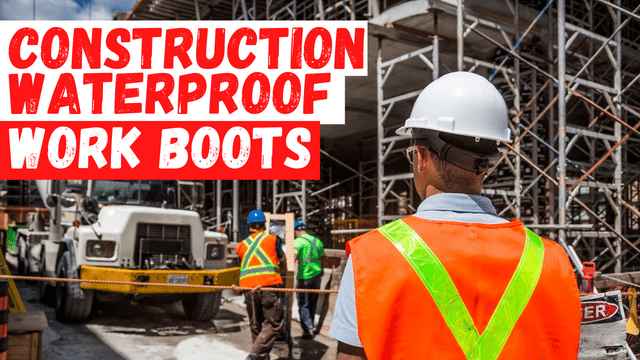
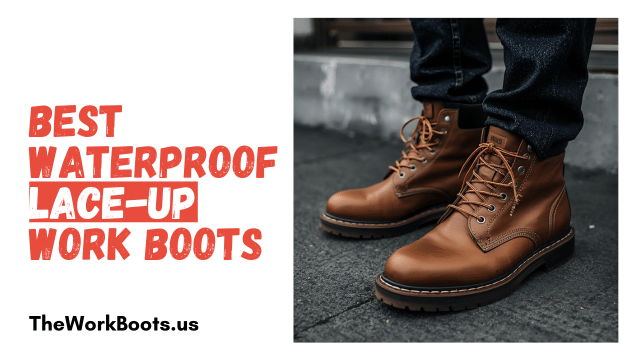










That is a very great product as I have used this product in snow days. Also the brand named Timberland is famous of its boots So I am pretty sure, this gonna work for the workers who work outside on car wash stops and in the countries where there is too much snow.
So that’s gonna work for them.
Highly recommended product.