5 Best Waterproof Slip-Resistant Work Boots
If your job puts you on oily floors, wet tile, icy loading docks, or rain-soaked job sites, a single bad step can mean a serious injury. The right pair of waterproof slip-resistant work boots solves two problems at once: keeping your feet dry through long shifts and giving you genuine traction control on the surfaces where falls actually happen.
We tested five of the best waterproof slip-resistant work boots on the market — across construction sites, kitchens, service routes, and industrial floors — to find out which ones actually deliver on both fronts. Below you’ll find detailed reviews, a full buying guide covering what actually matters in slip-resistant footwear, and answers to the most common questions about choosing the right pair.
Best Waterproof Slip-Resistant Work Boots — Quick Comparison
Here’s a fast overview of all five boots covered in this guide. Every pair listed is both waterproof and slip-resistant — the differences come down to toe protection, weight, and which work environment each one is built for.
| Image | Product | Key Features | Best For | Buy |
|---|---|---|---|---|
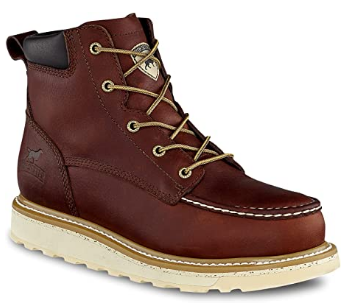 |
Irish Setter Men’s 83605 Non-Skid
100% Leather • Rubber Sole • Padded Collar
|
|
Best Overall | Check Amazon |
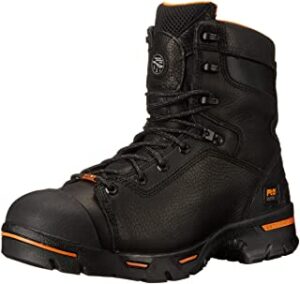 |
Timberland PRO Men’s Endurance 8″ PR
Steel Toe • Puncture-Resistant • Insulated • EH Rated
|
|
Best for Construction | Check Amazon |
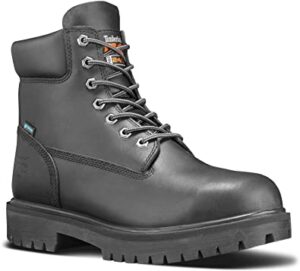 |
Timberland PRO Direct Attach Soft Toe
Waterproof Leather • Seam-Sealed • ReBOTL Material
|
|
Lightest Pick | Check Amazon |
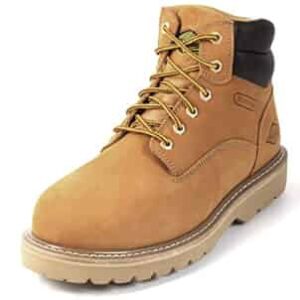 |
6″ Non-Slip Oil-Resistant Logger
Steel Toe • Electrical Protection • Puncture-Resistant Plate
|
|
Best for Electricians | Check Amazon |
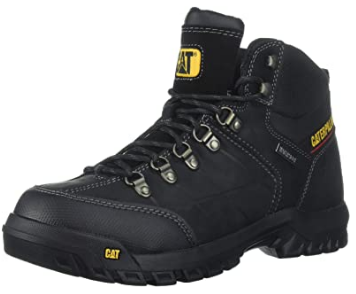 |
Caterpillar Men’s Threshold Waterproof Grip Boot
100% Leather • Anti-Slip Outsole • Breathable
|
|
Best Industrial Grip | Check Amazon |
Why Waterproof Slip-Resistant Work Boots Matter
Slips, trips, and falls remain one of the most common causes of workplace injury across construction, food service, manufacturing, and warehousing. Wet floors and oily surfaces dramatically increase that risk — and standard work boots, even durable ones, often have outsoles that aren’t specifically engineered for traction on these surfaces.
Pairing slip resistance with waterproofing addresses both the immediate safety concern (staying upright) and the longer-term comfort concern (dry feet through a full shift). Below are the specific reasons this combination matters for anyone working in wet, greasy, or unpredictable conditions.
-
Safety — Reduced Fall Risk Slip-resistant outsoles use specialized tread patterns and rubber compounds designed to maintain grip on wet tile, oily concrete, and icy surfaces — directly reducing the risk of falls and the injuries that come with them.
-
Comfort — Dry Feet All Shift Waterproofing keeps moisture out, which prevents blisters, fungal issues, and the general discomfort of wet socks during long shifts in rain, snow, or wash-down environments.
-
Durability — Built for Tough Conditions Boots designed for wet and slippery environments typically use higher-quality outsole compounds and waterproof membranes that hold up better under repeated exposure to water, oil, and chemicals than standard footwear.
-
Productivity — Fewer Distractions When your feet are dry, stable, and comfortable, you can focus on the job instead of constantly adjusting your footing or dealing with wet-sock discomfort — a small factor that adds up over an 8-12 hour shift.
Detailed Reviews: Best Waterproof Slip-Resistant Work Boots
#1 Irish Setter Men’s 83605 Non-Skid — Best Overall
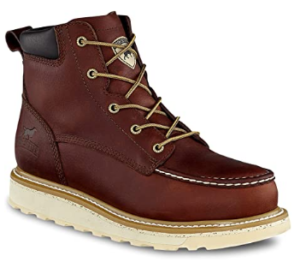
A 100% leather 6″ boot with a rubber outsole engineered for genuine non-skid performance, an EVA midsole for all-day comfort, and a padded collar that adds both waterproofing and fit.
Key Features
- 100% leather upper — naturally water-resistant and durable
- Rubber outsole engineered for genuine non-skid traction on slippery surfaces
- EVA midsole stabilizes the foot and reduces fatigue over long shifts
- Padded collar (~13.5″ opening) adds comfort and improves waterproof seal at the ankle
- Approximately 1.5″ heel — balanced stability without excessive height
- Rear pull-loop makes the boot easy to put on and take off
- Outstanding fit — many testers describe it as glove-like
- Rubber outsole grips slippery surfaces noticeably better than typical work boot soles
- Padded collar improves both comfort and waterproof performance
- EVA midsole keeps the foot stable and reduces end-of-shift fatigue
- Attractive, versatile design that works beyond the job site
- Priced higher than several alternatives on this list
- No dedicated safety toe — not suited to heavy-impact environments
The Irish Setter 83605 stands out for one simple reason: the fit and the sole work together better than on any other boot we tested. The inner sole stabilizes the foot in a way that feels close to resting, while the outer rubber sole grips the floor with genuinely non-skid performance — not just a marketing claim.
The padded collar at the top does double duty — it adds comfort around the ankle and contributes to the boot’s overall waterproof seal, keeping moisture from working its way in at the opening. For workers who spend long days on mixed indoor surfaces — tile, polished concrete, wet floors — and want a boot that handles slip resistance and waterproofing without compromise, this is our top recommendation. If you also need a genuinely lightweight option, see our dedicated guide for boots under 2 lbs per pair.
#2 Timberland PRO Men’s Endurance 8″ PR — Best for Construction
An 8-inch heavy-duty boot built for genuinely hazardous environments — steel safety toe, puncture-resistant plate, waterproof membrane, insulation, and electrical hazard protection all in one package.
Key Features
- Steel safety toe — ASTM-rated impact and compression protection
- Steel flex puncture-resistant plate underfoot — protection against sharp debris on dangerous job sites
- Waterproof membrane keeps feet dry in wet and muddy conditions
- Insulated construction for added warmth in colder environments
- Electrical hazard (EH) protection rating included
- Oil- and slip-resistant rubber outsole for traction on slick job site surfaces
- Full-grain premium leather upper for durability
- Comprehensive protection package — steel toe, puncture plate, EH rating, and waterproofing together
- Oil- and slip-resistant outsole performs reliably on slick construction surfaces
- Full-grain premium leather construction is genuinely durable
- Insulation adds value for cold-weather job sites
- No significant complaints identified in testing
- 8″ height and insulation make this one of the heavier options on this list
- Insulation may be excess for warm-climate or indoor-only work
The Timberland PRO Endurance is the most heavily protected boot on this list — and it’s built for environments where that matters. The steel flex puncture-resistant plate is the standout feature: it provides protection against nails, debris, and sharp objects underfoot, which is a genuine hazard on active construction sites that the other boots here don’t specifically address.
Combined with the oil- and slip-resistant outsole, this boot handles the dual hazards of a construction environment — unstable footing on debris and slick surfaces from spills, mud, or rain — better than lighter-duty alternatives. The EH rating adds a layer of protection for sites with electrical hazards, and the insulation makes this a strong choice for cold-weather construction work. Best for: Construction workers, demolition crews, and anyone working on sites with sharp debris, electrical hazards, and slick or wet surfaces simultaneously. For more options in this category, see our best waterproof construction work boots guide.
#3 Timberland PRO Direct Attach Soft Toe — Lightest Pick
A seam-sealed waterproof leather boot with a flexible PU midsole and non-marking outsole — built for workers who need slip resistance without the weight of a safety-toe boot.
Key Features
- Waterproof full-grain leather upper with seam-sealed construction
- ReBOTL material — made partly from recycled plastic bottles, reducing environmental footprint
- Antimicrobial odor control lining for all-day freshness
- 30-day comfort guarantee from Timberland
- Elastic PU midsole flexes naturally with the foot while absorbing shock
- Non-marking outsole provides slip resistance without scuffing indoor floors
- Approximately 200g per boot — genuinely lightweight
- Genuinely lightweight at ~200g — noticeably reduces foot fatigue
- Breathable, moisture-wicking lining keeps feet dry from sweat as well as external water
- Non-marking outsole is ideal for indoor environments with flooring restrictions
- 30-day comfort guarantee reduces purchase risk
- Sustainable ReBOTL materials are a nice bonus for eco-conscious buyers
- Soft toe — no safety-toe protection
- Not suitable for environments requiring ASTM-rated impact protection
This Timberland PRO model takes a different approach than the Endurance above: instead of maximizing protection, it maximizes comfort and weight reduction while still delivering genuine waterproofing and slip resistance. At roughly 200 grams per boot, it’s one of the lightest waterproof work boots available, and the weight difference is noticeable by the end of a long shift.
The elastic PU midsole is the standout comfort feature — it flexes with natural foot movement rather than fighting against it, while still providing meaningful shock absorption. The non-marking outsole means this boot won’t leave the scuff marks that standard rubber soles can leave on polished floors, making it a good fit for indoor industrial and warehouse environments with flooring policies. Best for: Warehouse staff, light industrial workers, and anyone who prioritizes all-day comfort and reduced fatigue over heavy-duty toe protection.
#4 6″ Non-Slip Oil-Resistant Logger — Best for Electricians
A full-grain leather logger boot with a non-conductive rubber sole, anti-collision steel toe, and puncture-resistant plates — built for workers who need slip resistance and electrical safety together.
Key Features
- Durable skid-resistant rubber sole for traction on oily and wet surfaces
- Anti-collision steel toe protects against impact from falling objects
- Electrical hazard protection — rubber sole acts as a non-conductive barrier
- Puncture-resistant plates add underfoot protection against sharp debris
- Premium full-grain leather upper with strong, breathable fibers
- Oil- and slip-resistant outsole suited to mechanical and electrical work environments
- Rubber sole provides genuine electrical insulation — well suited to electricians
- Steel toe protects against impact without compromising the electrical safety profile
- Oil- and slip-resistant outsole performs well on greasy mechanical room floors
- Full-grain leather construction is breathable in low-moisture conditions
- Reduces foot fatigue over extended shifts according to testers
- Reports suggest the boot may not be as long-lasting as premium alternatives
- 6″ height offers less ankle coverage than the Timberland Endurance’s 8″ shaft
This logger-style boot is purpose-built for the specific combination of hazards electricians and similar tradespeople face: electrical risk, oily floors, and the possibility of impact from tools or equipment. The rubber sole serves double duty here — it’s both the source of slip resistance on oily surfaces and a non-conductive barrier that adds a layer of protection against electrical hazards.
The anti-collision steel toe and puncture-resistant plates round out the protection package without compromising the boot’s electrical safety profile — both features use materials that don’t conduct electricity. The full-grain leather upper provides breathability that’s particularly valuable in mechanical and electrical rooms, which tend to run warm. Best for: Electricians, HVAC technicians, and maintenance workers who need slip resistance on oily floors combined with steel-toe impact protection and electrical hazard awareness. See our best waterproof steel toe work boots guide for more options with similar protection profiles.
#5 Caterpillar Men’s Threshold Waterproof Industrial Grip Boot — Best Industrial Grip
A 100% leather boot with an industrial-grade anti-slip outsole, an extra waterproof outer layer, and a breathable upper — built for workers who want a striking design alongside genuine grip and dryness.
Key Features
- 100% leather construction with an additional waterproof layer at the surface
- Breathable upper leather prevents excess sweat buildup
- Shaft height of approximately 5.25 inches
- Rubber outsole delivers genuine industrial-grade anti-slip grip
- Distinctive, modern design that stands out from typical work boots
- Industrial-grade rubber outsole provides excellent slip resistance
- Extra waterproof layer adds confidence in wet conditions beyond standard treated leather
- Breathable upper helps manage moisture from the inside as well
- Distinctive design appeals to workers who want function and style together
- Popular model — frequently sells out, indicating strong demand
- Lace hooks may be prone to wear or breaking over time
- No safety toe — not suitable for environments with impact/compression hazards
The Caterpillar Threshold leans into a more modern aesthetic than the other boots on this list, without sacrificing the core waterproof and slip-resistant performance the category demands. The combination of 100% leather construction and an additional waterproof surface layer gives this boot more moisture protection margin than standard treated leather alone.
The industrial-grade outsole is the standout functional feature — testers found the grip noticeably more aggressive than typical work boot soles, which translates to better confidence on wet warehouse floors, loading docks, and industrial flooring. The breathable upper helps offset the additional waterproof layer by managing internal moisture from sweat. Best for: Warehouse and industrial workers who don’t require safety-toe protection but want the best available outsole grip combined with a modern look and genuine waterproofing.
Buying Guide: How to Choose Waterproof Slip-Resistant Work Boots
Finding the right waterproof slip-resistant work boots comes down to matching a handful of key features to your specific work environment. Here’s what actually matters when comparing options.
Waterproof Materials
Look for boots made from treated leather, rubber, or specialized waterproof membranes such as Gore-Tex. These materials prevent water from seeping in and keep your feet dry in wet conditions. Seam-sealed construction is an important detail — even waterproof leather can let water in through stitched seams if they aren’t sealed.
Slip-Resistant Soles
The outsole is critical for preventing slips and falls. Look for boots with outsoles made from rubber or synthetic materials featuring deep lugs and specialized tread patterns designed for grip on wet and oily surfaces. Non-marking soles are worth considering for indoor environments with flooring restrictions.
Comfort and Support
Comfort matters enormously for long workdays. Look for adequate cushioning, arch support, and a comfortable insole. A padded collar and tongue add meaningful comfort around the ankle and can also contribute to the boot’s overall waterproof seal.
Durability and Construction
Choose boots made with high-quality construction methods like Goodyear welt or cement construction. Reinforced toe caps — steel, alloy, or composite — add durability and protection where it matters most. Premium full-grain leather generally outlasts lower-grade leathers and synthetics.
Breathability
Waterproof boots should also be breathable to prevent sweat buildup, which can be just as uncomfortable as external moisture. Look for moisture-wicking linings and breathable membranes that allow internal moisture to escape without compromising waterproof performance.
FAQ — Waterproof Slip-Resistant Work Boots
Absolutely. Slip-resistant shoes are crucial for maintaining workplace safety, especially in environments with wet, oily, or otherwise slippery floors. They’re engineered with outsole compounds and tread patterns designed specifically to maintain traction in conditions where standard shoes would slip. They’re also useful well beyond the job site — many slip-resistant boots perform reliably in outdoor conditions like rain, ice, and mud as well.
If your current boots don’t have adequate grip, you can scuff the outsole using sandpaper, a nail file, or a rough surface like brick, gravel, or rock. Rubbing these materials against the sole creates small grooves and texture that improve traction and reduce slipperiness. This is a temporary fix, though — for genuine long-term slip resistance, look for boots specifically designed and rated for that purpose, like the options reviewed in this guide.
Look for a deep, interlocked tread pattern — these designs enhance traction on slippery surfaces and reduce the risk of slips and falls. Beyond the tread, ensure the boots fit well and feel comfortable, since you’ll likely be wearing them for extended periods; comfort directly affects how attentive you stay to your footing throughout a shift. If your work involves oil or grease specifically, confirm the boot has an oil-resistant rating in addition to general slip resistance.
Yes — “non-slip” and “slip-resistant” are generally used interchangeably to describe footwear designed to reduce the likelihood of slipping or falling on wet or slippery surfaces. While these shoes may look similar to regular footwear at first glance, the key difference lies in the sole and tread design, which is engineered to provide enhanced traction and stability that standard outsoles don’t offer.
Yes — modern waterproof boots increasingly combine waterproof membranes or treated leather with breathable linings and moisture-wicking materials. These designs block external moisture while still allowing internal sweat vapor to escape, preventing the “swampy foot” feeling that fully sealed boots can cause. Several boots in this guide, including the Timberland PRO Direct Attach, specifically highlight breathable and moisture-wicking construction alongside full waterproofing.
No — slip resistance and toe protection are independent features, and not every job requires both. If your work doesn’t involve risk of heavy objects falling on your feet or compression hazards, a soft-toe slip-resistant waterproof boot (like the Timberland PRO Direct Attach or the Caterpillar Threshold on this list) provides the traction and dryness you need without the extra weight of a safety toe. If your environment does carry impact risk, pair slip resistance with an ASTM-rated steel or composite toe.
Final Thoughts
Which Boot Should You Choose?
For most workers who need an all-around waterproof slip-resistant boot, the Irish Setter 83605 Non-Skid is our top recommendation — the combination of fit, comfort, and genuine non-skid grip makes it the strongest overall performer on this list. If you’re an electrician or work around electrical hazards on oily floors, the 6″ Non-Slip Oil-Resistant Logger is purpose-built for that combination of risks.
For construction and demolition work where puncture and impact protection matter alongside slip resistance, the Timberland PRO Endurance 8″ covers the most hazards in one boot. Service and industrial workers who want a lighter, breathable option should look at the Timberland PRO Direct Attach or the Caterpillar Threshold, depending on whether comfort or outsole grip is the higher priority.
Ultimately, the right choice depends on your specific work environment — the hazards you face, the surfaces you walk on, and how much protection versus comfort and weight you need to balance. Whichever you choose, prioritize genuine waterproof construction and a slip-resistant outsole rated for the surfaces you’ll actually encounter on the job.